New Orleans is a city of stories. Some are worth believing, others come with a price.
Vodou, Bourbon St., Mardi Gras beads, powdered sugar spilling from beignets, and a jazz track. New Orleans is synonymous with tourists, said Missy Wilkinson, a crime and cops reporter for The Times-Picayune.
The city welcomed 19.46 million visitors in 2025, according to New Orleans & Company, the city’s destination sales and marketing organization. Millions of travelers also creates another industry: tourist traps.
With millions of people flocking to New Orleans, this parallel industry has flourished, creating opportunities for visitors to fall victim to street scams, inflated prices, and attractions that blur the line between historical fact and fabricated spectacle.
During one of her first trips to Bourbon Street, Wilkinson learned that not every New Orleans story told to visitors is true. The year was 1998, one of her first visits to Bourbon St., when she was 18 years old.
A man approached her outside a restaurant and introduced himself as Donald, claiming he had recently started working there but needed money for a place to stay at the local YMCA, she said. He told Wilkinson that if she helped him, he would return the favor by buying her dinner the next day.
Moved by his story, she said, which included a story about his daughter’s tragic death, Wilkinson gave him $5. Her friend gave him $20.
When they returned the next day, they asked the restaurant manager about Donald.
“He was like, ‘I’ve never heard of this person,’” Wilkinson said.
Wilkinson said the encounter was one example of the many variations of scams visitors can encounter in the city.
“There are some traps that we actually want to fall into, and that’s half the fun of New Orleans,” said Lucy Bustamante, a morning news anchor for Fox 8 New Orleans born and raised in the city.
Bustamante said visitors should not be afraid of exploring the city, but they should slow down enough to understand what they are seeing.
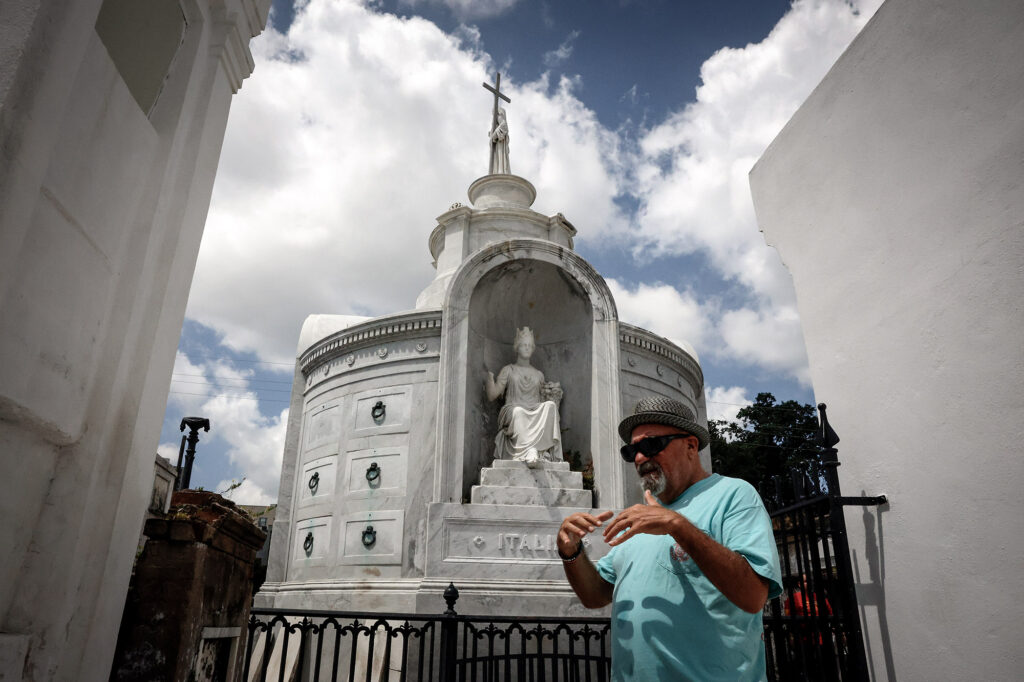
The home of Marie Laveau, the Voodoo queen of New Orleans, St. Louis Cemetery No. 1 attracts more than 100,000 visitors each year.
For Alan Raphael, a longtime tour guide who now leads tours at the cemetery, her tomb reminds him of the difference between a tourist and a visitor, he said.
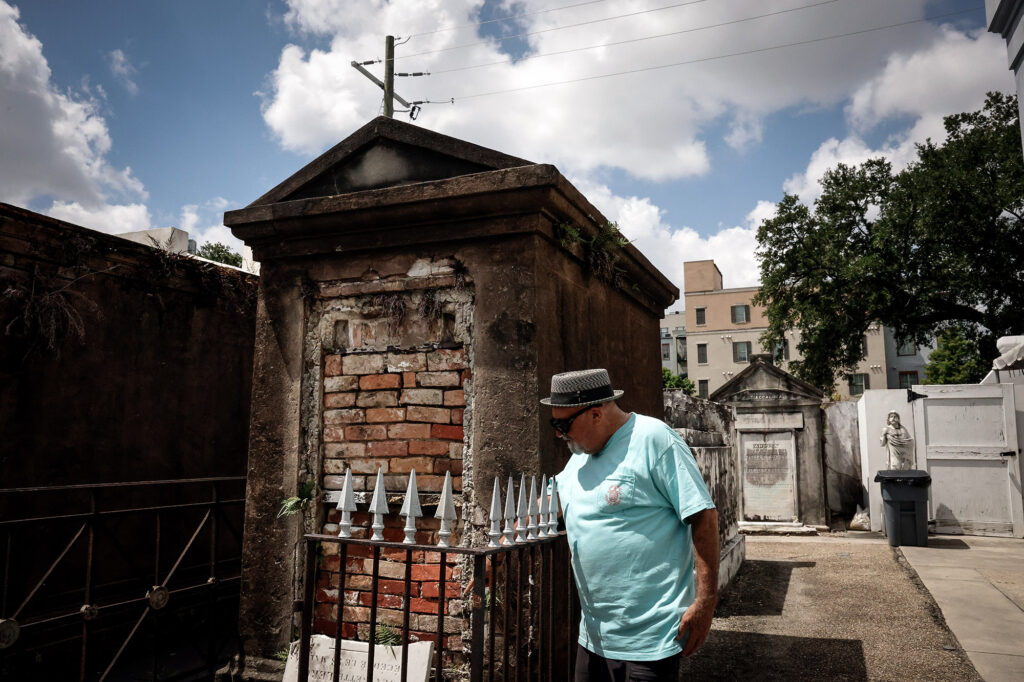
“A tourist is a Yahoo that has his hat on backwards and busting through the town, breaking all the rules,” he said. “A visitor, on the other hand, has planned his trip and knows what he wants to see.”
As he looked into the whitewashed brick vault, he shook his head left and right — markings left by tourists on the side, hoping to fulfill an urban legend that says that visitors seeking a favor must draw three Xs, turn around three times, knock on the brick, and leave an offering.
Raphael said some tourist traps are easy to spot, especially those happening directly on the street.
One of the most famous is the shoe scam, he said, where someone approaches a visitor and says, “I bet you $5 I know where you got them shoes.”
The trick relies on a play on words. After accepting the bet, the person tells the visitor they got their shoes “right here on Bourbon Street.”
Another common scam involves Mardi Gras beads. Raphael said some people offer beads to visitors, only to later demand money in return.
Some traps involve a simple drink offer. Others rely on a quick conversation.
“There’s a thing that some women or young women will do on Bourbon Street where they’ll go up to people and offer them a shot, and then charge them a lot of money for it,” Wilkinson said.
Modina pointed to another familiar sight in the French Quarter: fortune tellers and palm readers.
“The hand readers, the gypsies who read your hands and tell you about your future,” she said.

But Raphael said the phrase “tourist trap” does not apply to everything popular with visitors.
New Orleans, he said, has countless attractions that genuinely preserve the city’s history, including museums such as the Historic New Orleans Collection, the Storyville Museum, the Pharmacy Museum and the New Orleans Jazz Museum.
“They tell the story of New Orleans in a very unique and up-to-date way,” Raphael said.
While Bourbon Street remains one of the city’s biggest attractions, Raphael said visitors looking for a more local experience should explore beyond the famous strip.
“Most of the places don’t charge a cover; they’ll have a one-drink minimum kind of a thing,” he said.
For those wanting to experience the city’s history, Bustamante said, visiting Jackson Square and stepping inside St. Louis Cathedral is a must. The cathedral is the oldest continuously operating in the United States.
Another quintessential experience for tourists, she said, is exploring the French Quarter during the day, when visitors can appreciate the Spanish architecture, French influence and details hidden throughout the neighborhood.
For Bustamante, the best way to experience New Orleans is not by chasing every famous attraction, but by slowing down long enough to understand the stories behind them.
Thai Theodoro is a senior at Grinnell College in Iowa, where she is pursuing a degree in political science with a concentration in Latin American studies. Reach her at theodorot [at] grinnell [dot] edu. Learn more about her at thainatheodoro.com.br.
