Undocumented journalists navigate personal risk while covering immigration
Since President Trump began his second term in 2025, undocumented immigrants and DACA recipients have faced renewed uncertainty as immigration enforcement has intensified across the country. Among those affected are journalists who not only report on immigration but also live with the same fears as the communities they cover.
For these journalists, covering immigration means balancing their responsibility to inform the public with the need to protect their own safety, their families and the people who trust them with their stories.
“I’ve always been pretty open about my status prior to the recent administration,” said a 28-year-old journalist based in Southern California who asked not to be named out of fear of being targetted. “As of now, I’m not as open about it. I don’t post about it online. I don’t talk about it with people. It’s not a great feeling. You kind of have to hide a part of you.”
The reporter, who works for an independent, women-led newsroom, covers the Latino community with a focus on immigration, education, health, social justice and local politics.
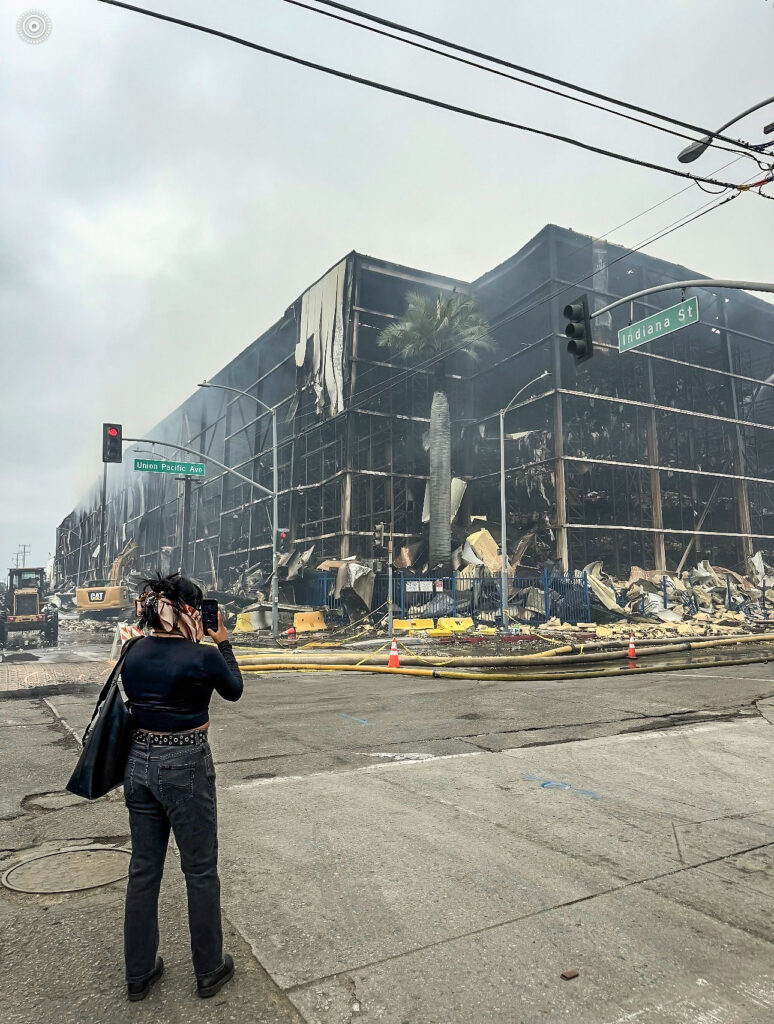
Since immigration raids and protests have escalated across Southern California, in cities like Los Angeles, Orange County, and the Inland Empire, she has become more cautious about what she shares publicly and how she goes about her reporting.
Her concerns are not unfounded.
In 2025, journalists covering immigration enforcement found themselves becoming part of the story.
Salvadoran journalist Mario Guevara was arrested while livestreaming a No Kings protest in Georgia before later being deported to El Salvador. After being deported, he told Atlanta Magazine:
“I never thought that I was going to be one more prisoner, a person treated like a criminal. I did not commit any crime. The only crime I committed was working hard and reporting on immigration. I feel like I lived the very story that I used to report on.”
In Nashville, asylum-seeking reporter Estefany Rodríguez spent more than two weeks in federal immigration detention before being released in March of 2026.
For the Los Angeles reporter, those incidents reinforced that journalists are not immune.
“When you’re reporting on immigration, you’re reporting on the things that are happening to you, or that could happen to you,” she said. “That in itself is not a beautiful feeling.”
Her identity often shapes difficult editorial decisions.
When workshoping her stories or reporting out in the field, she found that due to the trust she has built with the community over the years, people she interviewed, often without knowing, would overshare information.
“It kind of felt like if I published this it would be unsafe for them,” she would ask herself. “I had to think, do I want to risk this person’s freedom? Do I want to risk this person’s life for my story?”
Although she strives to maintain journalistic standards, she said sharing the same lived experience as many of her sources creates an emotional burden that is difficult to separate from her work.
“It’s a lot of emotional labor. Sometimes it feels like the job is not fully done. It feels very personal. I think even mental health is important to talk about,” she said. Because when I talk to them (other journalists), a lot of folks are emotionally drained and tired but at the same time very committed to doing our part and informing folks the best way that we can and hoping that we can continue and that we can give each other even a bit of hope.”
The emotional toll extends beyond interviews and, at times, has gotten physical, too.
During the Los Angeles protests, a rubber bullet struck her leg and ankle while she was reporting.
“I’ve covered other protests in the past, but these protests in the last year or so have just felt much more,” she paused to remember the 2025 protests. “You just have to be a bit more careful.”
While she’s always been cautious on and off the field, she now has to take extra steps to ensure her safety.
Physically, when covering a protest, she now has to bring with her protective gear to shield her from rubber bullets, tear gas and other tactical gear that law enforcement uses to disperse crowds.
And while other reporters might be able to get up and go for interviews, being undocumented means checking where U.S. Immigration and Customs Enforcement activity has been spotted before heading out, among other precautions.
“Sharing my location with people, letting my editor and others know where I’m at, when I’m traveling and where I’m traveling from, and what time I’m supposed to get there,” she explained. “Communicating this with my editors and having really good relationships with my fellow journalists that I work with.”
When she works on any immigration story that raises personal safety concerns, she will communicate that to her newsroom, which, to this day, hasn’t pressured her to take on a story she might feel uncomfortable with. As an extra precaution, she and her newsroom collectively decided to remove her image from her author page.
“I’ll tell my editor, ‘I really like this piece, but it’s also about immigration. It feels a little bit vulnerable. Instead of my full name, can we attribute it to the publication?’,” she explained. “No one was like, ‘hey you need to write this, or hey you need to cover this.”
Even then, the emotional weight of her coverage eventually caught up with her.
After spending months covering immigration raids and protests, she stepped away for nearly three months to protect her mental health.
Mental Health Becomes a Priority
Outside of work, she intentionally disconnects from journalism by spending time with family and friends, going on walks, and participating in and organizing community events. As a natural writer, she also finds other outlets for self-expression, including poetry, to help her process her emotions.
“Just knowing that I am more than just my job,” she said. “That itself feels very validating.”
Even so, concerns about her future remain constant. She worries about herself, her safety and her own future, but always has her family in the back of her mind.
Throughout the year, she has had family members who have self-deported, a decision that has often crossed her mind. To her, Los Angeles, particularly the South L.A. area, has been her home for as long as she can remember.
“Knowing that I don’t have security here…has always been on my mind,” she expressed. “This is home for me, but it’s a home that I feel that I want, but I don’t know if other people want me in.”
Despite those fears, she said, her community keeps her grounded.
“It’s not the U.S. in general that keeps me here,” she said. “It’s the people in it. Having friends. I’m so grateful for my chosen family. I don’t really have a lot of family here in the U.S. anymore, unfortunately, but my friends have just been amazing, and they keep me going.”
Uncertainty Hovers Over DACA Reporters
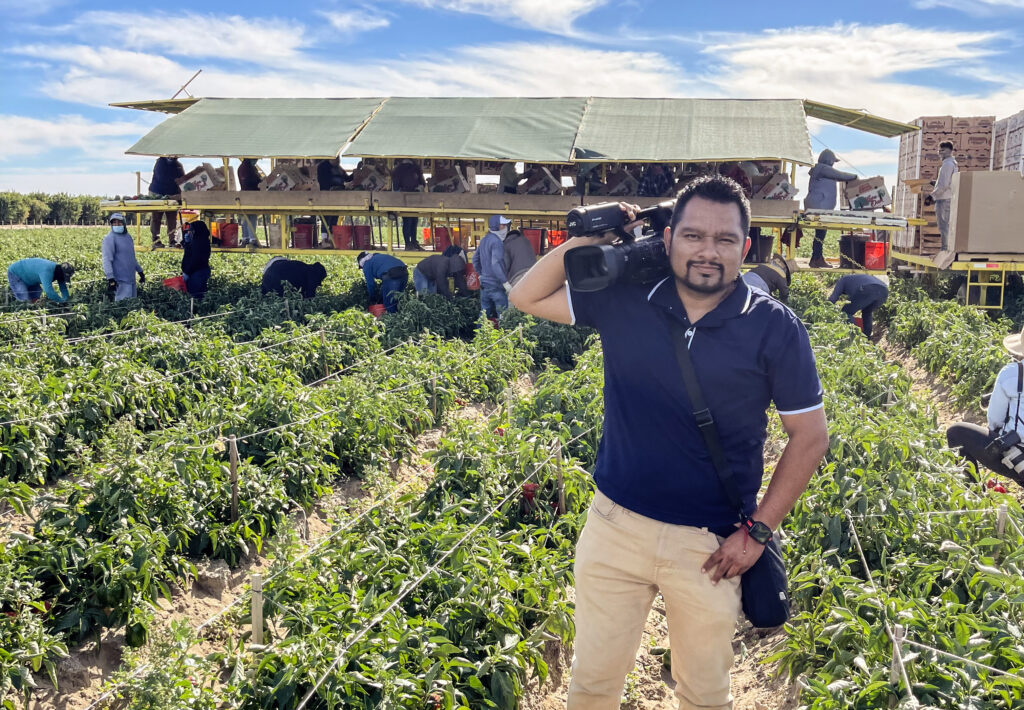
Antonio Marquez understands those fears.
Born in Guanajuato, Mexico, Marquez came to the United States when he was seven years old. He discovered he was undocumented when he was 15 years old. When the Deferred Action for Childhood Arrivals program was created in 2008, he applied and then became a recipient.
“Being a DACA recipient gives me that extra layer of people trusting me and being able to tell me their story,” Marquez said.
Today, he works as a multimedia journalist for Notivalle, in partnership with Entravision and NBC Palm Springs, covering immigration and community issues throughout the Coachella Valley.
But that same identity can also place him at greater risk.
The DACA immigration policy established by former President Barack Obama in 2012 is also supposed to provide temporary protection from deportation to some undocumented immigrants who were brought to the country as children.
However, since Trump’s second term, DACA recipients have also been detained and deported.
Just last month, Congressman Joaquin Castro sounded the alarm over ICE data that his office obtained, which revealed that 85 DACA recipients — none with a criminal record — had been deported since January 2025 under the Trump Administration.
During the immigration raids and protests in Los Angeles, Marquez said he avoided many assignments that put his safety at risk.
“I was like, ‘If citizens are being taken, imagine me,’ ” he said. “I’m over here, five foot nothing, Mexican [and] brown skin. I’m gonna get deported right away.”
Instead, his newsroom often chose to keep him away from potentially dangerous situations.
“When there were protests going on, my news director was like, ‘If something massive is going on, you’re not going,’ ” he said. “It was kind of sad that I wasn’t able to go to something that’s affected my community. But it gets to the point where my safety is what matters the most.”
He remembers another assignment in 2023 when he was sent to report in El Centro, California, as migrants were expected to cross the border.
Although his news director at the time knew his immigration status, she also understood why he was uniquely qualified for the story.
“She knew my weakness, which was being undocumented,” Marquez said. “But she also knew my strengths, which were that connection we could have with the community.”
Like many DACA recipients, Marquez lives with uncertainty about his work authorization, which must be renewed every two years.
“I am stuck because my work permit is about to expire, and I have to renew it, and since they’re taking a long time. I’m like ‘what if it doesn’t come in on time? ’” he said.
Despite those challenges, Marquez continues to use his own experiences to connect more deeply with undocumented sources.
“The way I think about it is having a Swiss knife: you have all these tools under your belt, and if I’m covering a story about being undocumented and in order for them to trust me and be able to open up to me, I talk about my experience,” he explained.
As immigration raids continue and the deaths in detention centers rise, both reporters agree that their work remains essential, even when it comes with emotional exhaustion, personal risk, and an uncertain future.
“I feel like I’ve seen what living in fear has been for my loved ones. I’ve seen how much toll that’s taken on their mental health, on their own identity, and I’m grateful that I’m privileged enough to have been able to see that and want something different,” said the 28-year-old reporter from Los Angeles. “Obviously I’m still very frightened, but there are times where I’m like ‘this is all I can do.’ ”
Abigail Segoviano is a recent graduate from San Diego State University. She aspires to write about the NBA one day and is an intern for La Voz, the Spanish-language publication of The Arizona Republic. Reach her at abigailsegoviano1 [at] gmail [dot] com.
