Utah’s Latino population is growing. West Valley City has been at the heart of it for centuries.
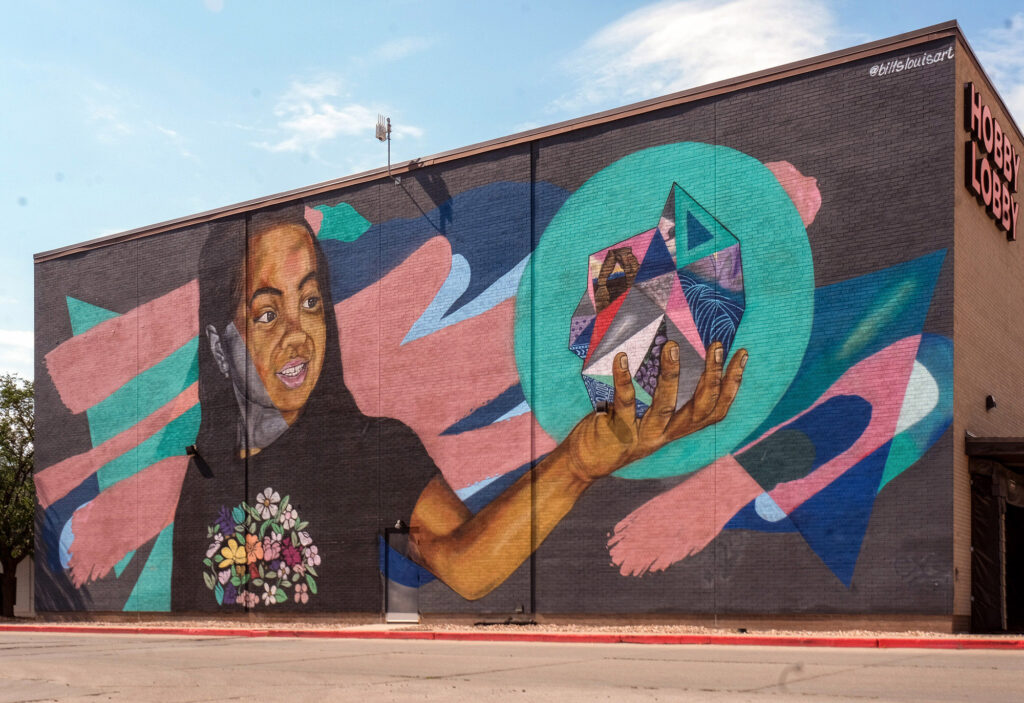
Fresh conchas line the shelves inside a neighborhood panadería as customers switch effortlessly between Spanish and English. Outside, signs advertise taquerias, mercados and auto shops before traffic spills onto the main drag.
For many not from the Beehive State, the image of Utah tends to look like a specific stereotype: white, blonde and Mormon. But the reality is far more complex than that.
In West Valley City, a community just west of the state capital, Utah’s largest Latino population has molded the city’s culture for centuries. This influence has begun to spread beyond the borders of West Valley City and into neighboring Salt Lake, where a new community center planned will offer public education, cultural events and workforce development that cater, specifically, to the region’s Latino residents.
How West Valley City became the hub of Latinidad is a story of hardship and the opportunity that grows from it.
West Valley City sits at the heart of the Northwest Valley, home to over 331,000 Utahns, making up a third of the state’s most populous county. A majority of the city identifies as Hispanic or non-White, according to a 2025 study from the University of Utah’s Kem C. Gardner Institute — more than twice the statewide share of 24 percent.
No other city in Utah has a larger Hispanic population. And it’s beginning to influence its neighbors.
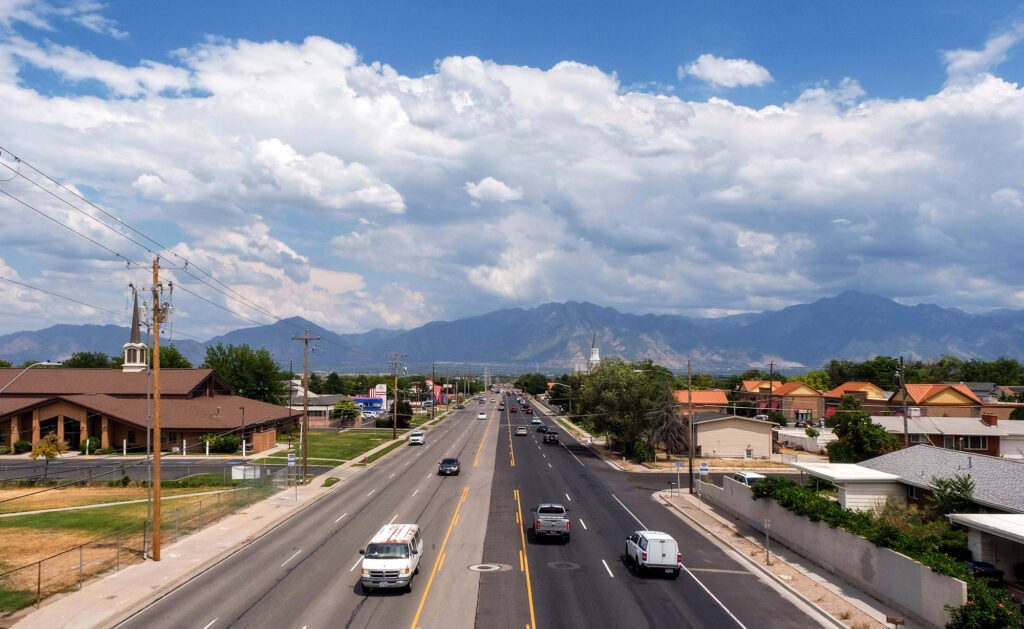
In Salt Lake City, nonprofit Centro Cívico Mexicano is planning to build a community center focused on the Latino residents of the region. The organization, which was founded in the 1930s, already provides educational programs, food assistance, mental health resources, youth sports, art projects, immigration assistance and other community services.
“And it’s not just Hispanics now that are coming here,” said Brandy Farmer, president and CEO of Centro Cívico Mexicano. “We have so many people that have come from other countries that are beginning to learn more about it and begin to rent our spaces for their weddings, quinceañeras and that sort of thing.”
The new community center, Farmer said, will allow the organization to expand its services and continue serving future generations.
“I want the population to get involved in their community by voting, to have their voice heard, because a lot of them, I call them invisible people,” Farmer said. “We have the birthright citizens that need to get involved in registering to vote for them to represent their voice.”
Building a community center like this extends a centuries-long history of Latinos in the area.
Railroads, farms and nearby mines drew workers to Utah’s west side throughout the early twentieth century. In his article “ ‘El diablo nos está llevando’: Utah Hispanics and the Great Depression,” historian Jorge Iber wrote that many Hispanic laborers worked as betabeleros, or sugar beet workers, while others found jobs maintaining railroad lines, or mining at Bingham Canyon.
Much of that work was concentrated on the west side of the Salt Lake Valley.
Between the first and second world war, employment with railroad companies and at Bingham Canyon, where Kennecott Copper operates, expanded across the west side of the Salt Lake Valley. Historical accounts from Latino families in the Northwest Valley frequently describe those industries as their entry point into Utah.
Today, many of those historic employment centers encircle West Valley City. Railroad corridors remain on the east side of the city, while the Kennecott Copper mine lies just southwest of the city.
Latino settlements tend to develop in working-class areas, said sociologist Pepper Glass, a professor at Weber State University. As families settled near jobs, communities began to take shape.
“What you see are these communities where the resources are set up for immigrants,” Glass said. “Latino grocery stores start to pop up, and … resources of networks of looking for jobs and support.”

Glass said West Valley City’s Latino story is similar to those of cities around the country.
He referred to these groups as ethnic enclaves, a pattern seen across the country. He pointed to neighborhoods such as Chinatown in San Francisco, the Cuban-American community in Miami and Mexican-American communities in East Los Angeles as examples of immigrant communities that formed around shared culture, businesses and support networks.
West Valley City’s Latino strongholds were built over generations. Historians trace the area’s Latino roots to the late 1800s, when immigrants from various regions came to Utah seeking work on railroads, in mining and agriculture.
“Generally, it seems that once Latino communities formed in this area, they became safe and welcoming neighborhoods for newer arrivals,” said Heidi Prior, a public policy analyst at the Kem C. Gardner Policy Institute. “Perhaps offering opportunities for setting up homes and businesses that didn’t exist in other parts of the valley.”
Noemi Hernández-Balcázar has lived in West Valley City for 20 years. In that time, she said, she has come to love it, a place she described as somewhere people work hard, care for one another and take pride in their community.
“I have good neighbors and caring neighbors, and it’s culturally diverse,” Hernández-Balcázar said. “It’s not an exclusively Latino neighborhood, even though lately more Latinos have moved into my street.”
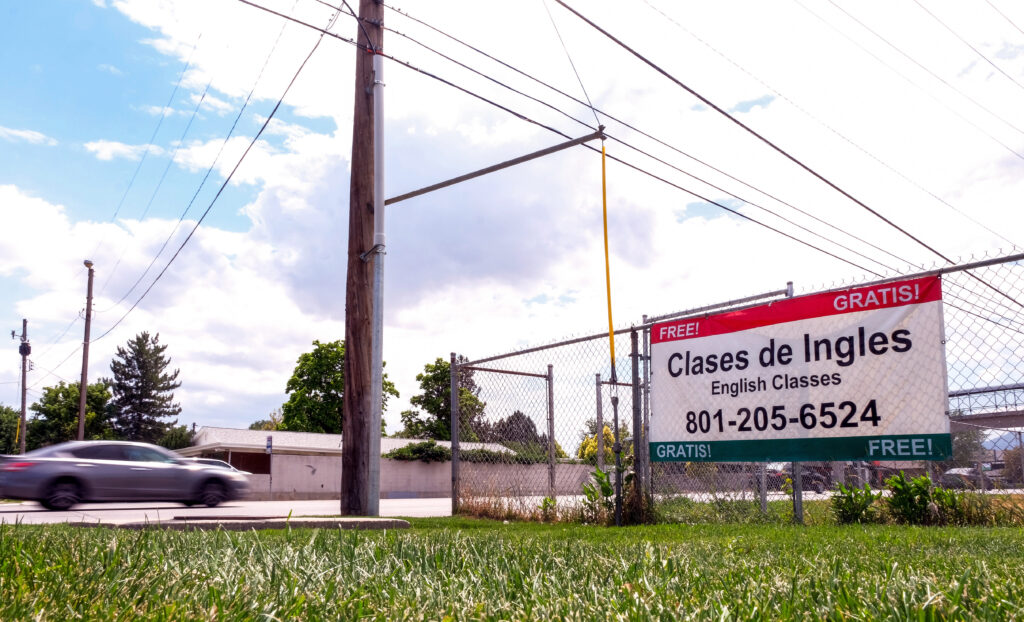
When she moved to the city, Hernández-Balcázar said, her decision was driven largely by her ability to find somewhere affordable to live. But the area is changing.
“West Valley is getting huge,” said Hernández-Balcázar, adding that the effects of gentrification are changing the look and feel of West Valley City.
“Many of the new housing that is being built is brand new, beautiful and just much fancier than many parts of West Valley,” she said. “What I am telling you right now, you need to remember that I am telling you of something that is specifically 10 square blocks. West Valley is very big. “
She sees some of this growth as a good thing, a way that West Valley City will continue to change and diversify, as it has done for centuries.
“You can see it’s vibrant, economically vibrant,” she said. “You can see that a lot of people work really hard to be part of the economy of the country, or the state of our city.”
James Gordon is a senior at Weber State University in Ogden, Utah. James is the editor in chief for the student publication, The Signpost. He aspires to cover news in and around the greater Salt Lake City metro area. James can be contacted at jeg.jamesgordon [at} gmail [dot] com.
