Get off your phone: Snail mail clubs take off among Latino creators
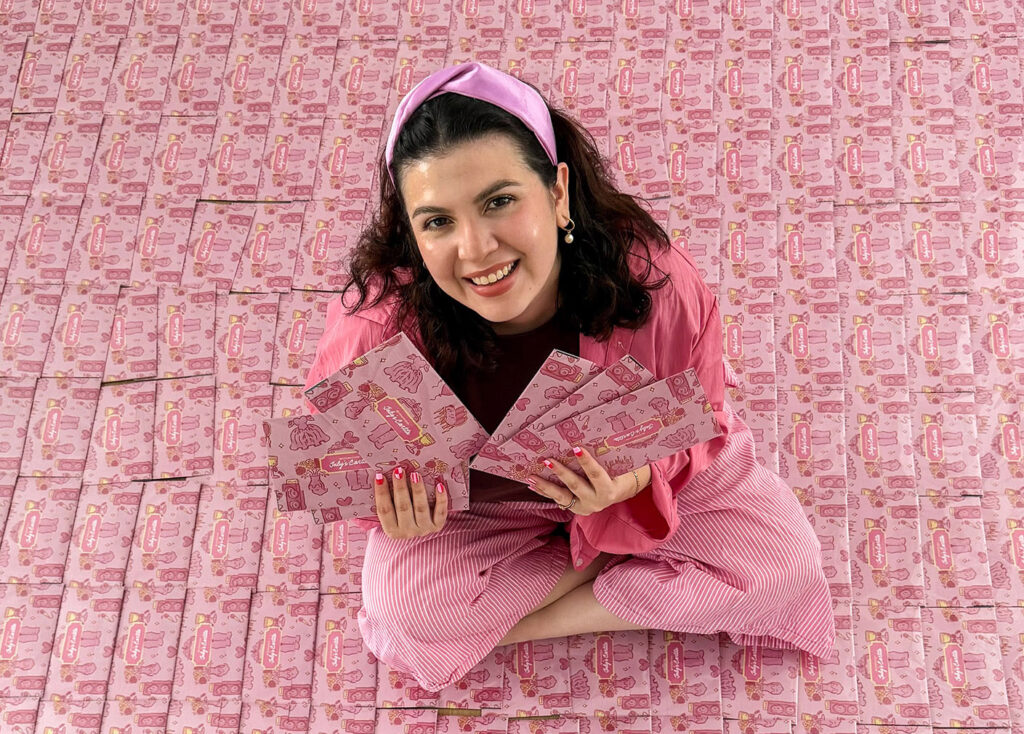
When Ivana Quesada walks into the post office, she tends to attract some attention.
She’s usually behind a 250-pound mail cart, pushing through the narrow aisles at her local branch in Southwest Florida. Inside the cart are 3,500 green and pink hand-stuffed envelopes, stamped and labeled to addresses as far as Tasmania, Australia and Thailand.
In 2026, most communication is digital. But for members of Las Comadres Mail Club, the slow exchange of physical letters will never go out of style.
“Post offices here all already know me,” said co-founder and creative director Ivana Quesada. “They’re like, ‘There’s the girl with the mail club.’”
Mailing clubs like Quesada’s are emerging as a physical alternative to online newsletters and social media channels. In these clubs, subscribers pay a nominal fee — usually between $8 to $15, makers said — for a monthly package to arrive in their mailboxes. The “snail mail” they receive can be filled with anything from heartfelt letters to homemade recipes and original art.
On the first week of each month, Quesada drops off thousands of 5-by-7-inch packages for Las Comadres Mail Club, which is specifically billed as a collective for Latinas, by Latinas. Inside are waterproof stickers, iron-on decals and a monthly newsletter, all designed and packed by Quesada and her team of family members and friends.
Searches for “snail mail club” have grown more than 5000 percent in the past year, according to Google Trends, which has labeled it a “breakout trend.” On social media, algorithms have begun to promote videos depicting package assembly and other aspects of mail clubs, with #snailmail tagged over 195,000 times on TikTok.
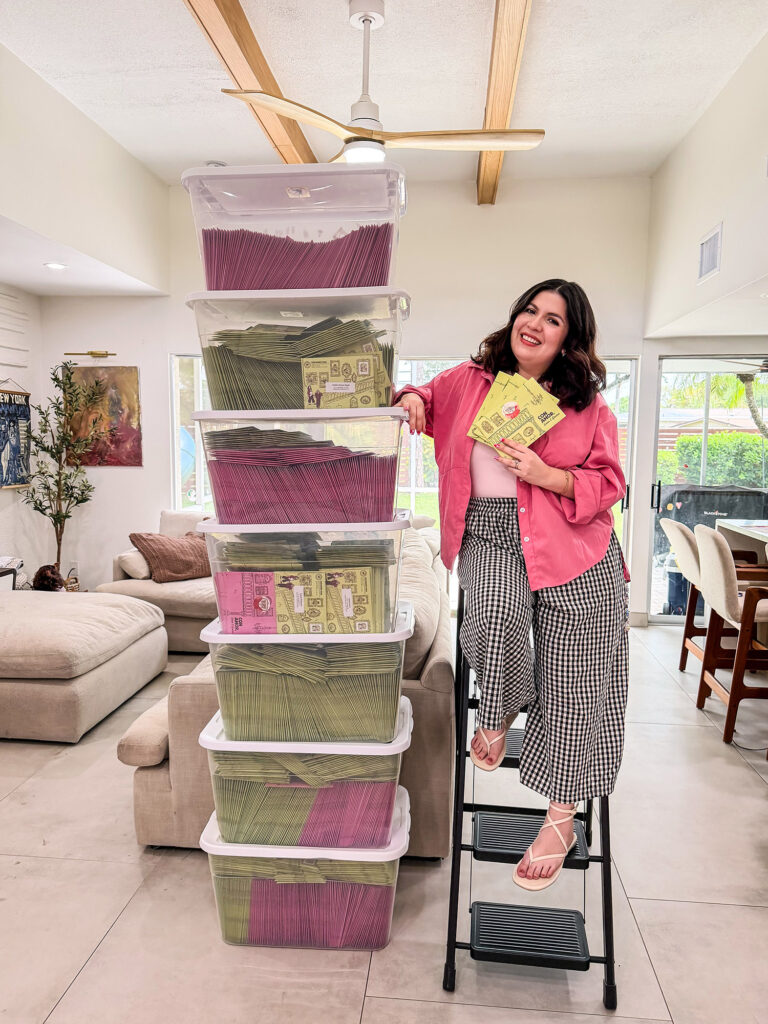
Quesada discovered mailing clubs on TikTok.
She had been laid off from her job as a graphic designer in 2024 and had unsuccessfully been trying to start her own small business. Born and raised in Venezuela, Quesada saw a hole in the market and thought a Latina-focused mailing club might offer some whimsy to her community amid depressing and heart-wrenching news headlines.
“There was a moment that it just kind of clicked when I was looking at somebody else’s mail club. They always show the stickers and all of the cute stuff, but one of them said something about the community that she builds with it,” Quesada said. “It just sparked this thing in me where I was like, ‘I want to be able to speak with these other people in my community without having to go on social media.’”
Mailing clubs serve both broad and niche markets, and other Latino creators have also seen the opportunity to create a space for their culture through physical media.
Peruvian mail club Sobrecito Peruano was founded to connect Peruvians worldwide. “At least for the Peruvian community, I think they just love having something about Peru,” its founder, Nicholas Sinlah, said. “It’s representation.”
In November 2025, Quesada dropped about $500 on supplies, and drafted Genesis Benedetti, whom she had brought onto her small business efforts, to help with illustrations. The two soon began designing the first edition. Each month, a new theme showcases an aspect of Latina culture, nostalgia and stories. The June 2026 theme was “Iconic TV” and featured a colorful tribute to Sabado Gigante, stacks of VHS tapes and an iridescent sticker of Walter Mercado wishing the world “mucho, mucho amor.”
Benedetti and her team of illustrators, who are based in Brazil, Argentina and El Salvador, turn Quesada’s ideas into stickers, decals and prints for the package. Several boxes show up at Quesada’s front door the first week of each month. It’s a precursor to a week of all-nighters as she works to pack all of the envelopes.
Within the first month of the group’s first Instagram post, the club grew to more than 400 subscribers. She needed help. More subscribers meant more letters to send. So she brought in a friend and a neighbor to fill out her team.
“We’ve made the best team ever, and they get so much done, and then my mother-in-law has been super lifesaving too. She literally came this week, like, she’ll do all the labels, the stamps,” Quesada said. “Each person takes some home and then we found that sometimes they also get help.”
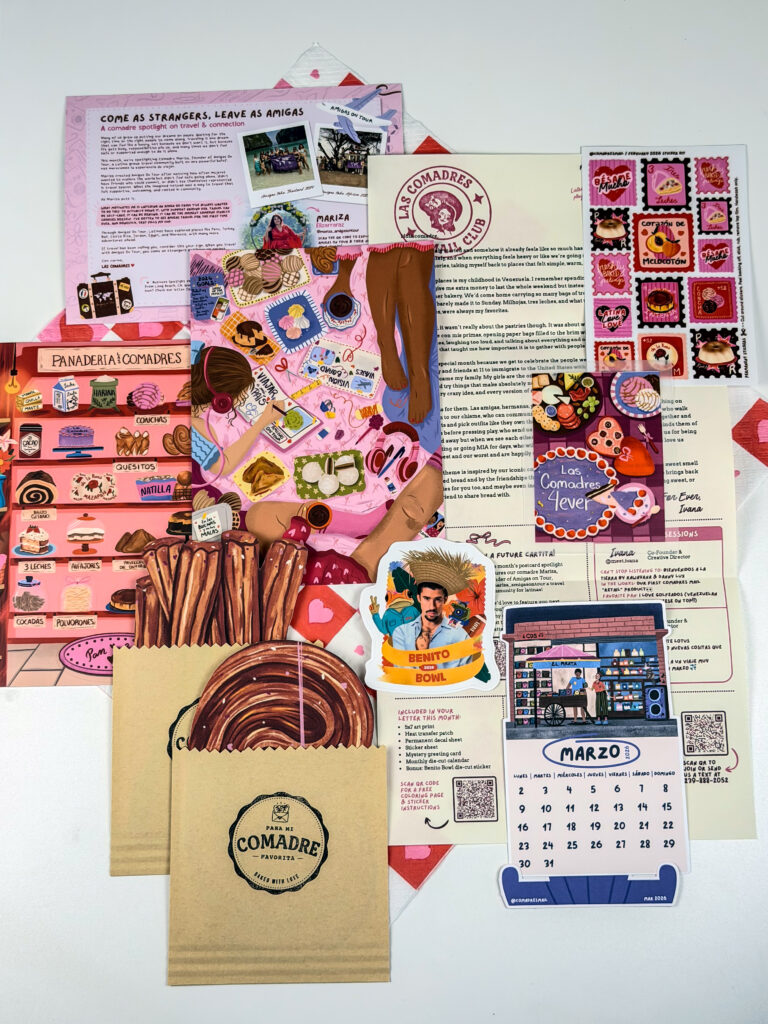
When Quesada started out, she thought the communication would go one way. But she’s been surprised by subscribers writing back.
They’ve sent her their scrapbooking prints, told her their secrets and shared their dreams. She’s even gotten a couple of subscribers confessing how they felt inspired to open a business — or their own mailing club.
“People more and more are just seeking to leave their phones. They want to be able to connect outside of their phones within their own place,” Quesada said.
“Sometimes I look at the names on the labels and realize there is a whole community of people from just this one person,” she added. “She comes from generations of other people. What’s her story? Where is she from? How is she here? It’s so cool to think about that and how I will be able to enter her home and speak about a particular story in my letters that somehow they always relate to as well.”
In each monthly package, Las Comadres features a member of the community. Quesada calls them all her comadres. She wanted it to feel like a collective where Latinas could share their side hustles, family recipes, poems and social causes.
“There was a story that we actually featured two months ago about a lady that talked about how she grew up in extreme poverty and she went through a lot of food scarcity. She grew up to be a master gardener,” Quesada explained. “She teaches how to garden your own food online to people in need in the community.”
Even though Las Comadres started off as a way to get offline, the group has grown digitally, too. Las Comadres has a WhatsApp group with 500 members, where people can form separate groups to chat, network and share interests. Some women in the group have even started their own travel journal where they mail a journal to each other and each fill a page with written entries or photos.
Quesada scrolls through these groups in awe. She sees strangers who have become a community, and a culture that has found its joy in human connection. She can hardly believe that this all started with some homemade stickers and a postage stamp. To her, it feels like a dream.
Sofia Esparza is a recent graduate of the University of Minnesota Twin Cities. She has written for Her Campus and aspires to produce enterprise journalism and profiles for a major magazine. You can contact her at sofiajesparza [at] gmail [dot] com or on Instagram @sofiaesparza.media.
