NAHJ President Dunia Elvir will run again, could become longest-serving president
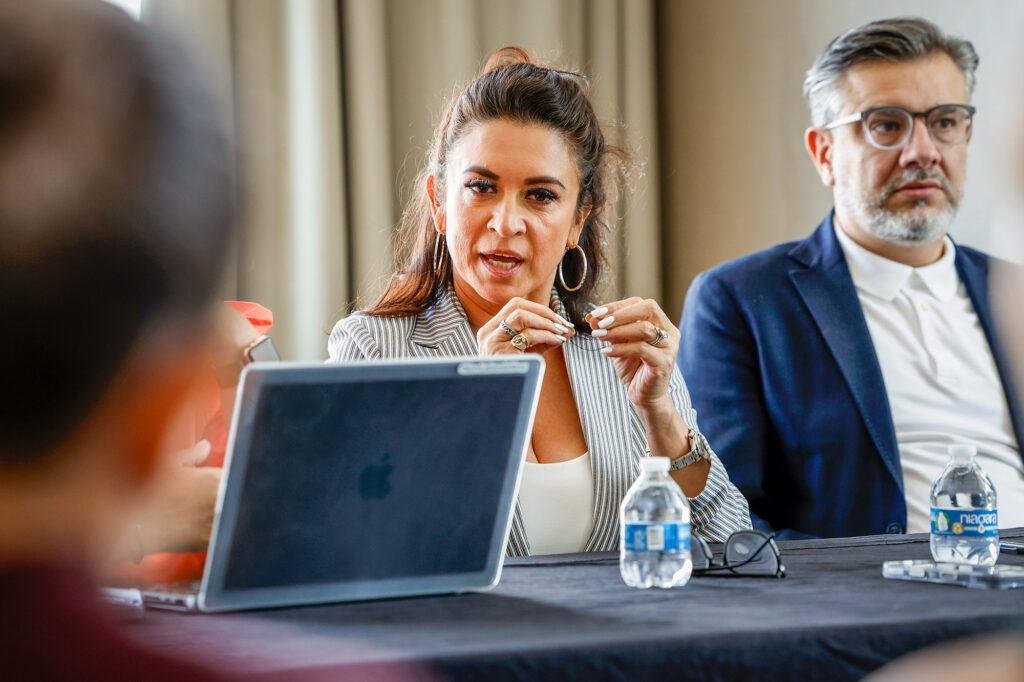
Dunia Elvir will run for reelection as president of the National Association of Hispanic Journalists this year, setting her up to become the longest-serving top elected leader the nonprofit’s board has ever seen.
Elvir announced her intention to run again at a news conference with the Latino Reporter on July 21 in New Orleans, well ahead of the October deadline for candidates to declare. The full slate of candidates will be announced on Oct. 5, NAHJ elections officials said.
“I made a decision already,” Elvir said at the news conference this week. “Yes, I’m gonna run again.”
Elvir will be the first NAHJ president to run for a second consecutive term since the organization’s bylaws were changed in 2024, her first year in the role.
Voting will begin on Nov. 2 and close on Nov. 13. The winners will be announced immediately after, according to Jess Elizarraras, the board’s region 5 director, who went over the election timeline on Saturday at the annual membership meeting.
NAHJ board presidents had previously been unable to run for reelection, effectively limiting their terms to two years at a time. They could run again non-consecutively, but that changed when the organization’s membership approved updated bylaws two years ago.
The NAHJ president can now serve for two consecutive terms, a total of four years, per the new bylaws.
The organization’s national elections will take place simultaneously with local elections in November. Members voted in 2024 to separate the association’s elections from the annual NAHJ Conference in July.
“It was a lot of work and too confusing for members to have to deal with an election at the same time when you have to focus on the sessions that you want to go to,” Elvir said.
Previously, the elections took place during the conference because the in-person gathering was the primary way that members could interface before the era of Zoom, said Julio-César Chávez, NAHJ’s vice president of broadcast, who helped to rewrite the bylaws. Now that videoconferencing platforms are widely used, meetings with members can happen virtually.
“It gives us a nice little buffer, and it doesn’t hold us to requirements that were important back when we first started,” Chávez said.
Board members dismissed concerns that voter turnout or conference attendance might be impacted by the date change.
Sofia Esparza is a recent graduate of the University of Minnesota Twin Cities. She has written for Her Campus and aspires to produce enterprise journalism and profiles for a major magazine. You can contact her at sofiajesparza [at] gmail [dot] com or on Instagram @sofiaesparza.media.
